Why Your Commercial Property Needs a Summer Irrigation Audit
Tennessee summers are no joke. In Clarksville and across Montgomery County, temperatures regularly climb above 90 degrees Fahrenheit for weeks at a stretch, and rainfall is anything but predictable. One stretch you get a weekly downpour, the next you go 10 days without a drop. For commercial property owners, that kind of weather unpredictability puts your irrigation system to the test in ways that a basic timer setting simply cannot handle.
Here is the problem most property owners do not realize until the damage is done: the majority of commercial irrigation systems are still running the same schedule they were programmed with in the spring. That means some zones are being overwatered while others are running dry. Overwatering wastes money and promotes disease. Underwatering burns turf, kills root systems, and leaves your property looking neglected.
This guide covers when to water, how much your commercial turf actually needs in the Tennessee summer heat, how often to run your system, and exactly how a professional summer irrigation audit takes the guesswork out of all of it. If you manage commercial irrigation in Clarksville, TN or anywhere in the region, this is the information you need before the peak heat window arrives.
What Is a Commercial Irrigation Audit and Why Summer Changes Everything
A commercial sprinkler system inspection is not a repair call. It is a full, zone-by-zone evaluation of your entire irrigation system. Every zone is run independently. Coverage patterns, water pressure, head types, controller programming, and runtime are all assessed and documented. The goal is to find what is underperforming before you see the results on your turf.
Summer changes the equation significantly, especially in Middle Tennessee. The heat index in Clarksville regularly reaches 95 to 105 degrees Fahrenheit from June through August. Montgomery County soils have a high clay content, which means water either pools on the surface and runs off or dries into a hardpan that turf roots cannot penetrate. On top of that, the combination of heat and humidity creates ideal conditions for fungal diseases like Brown Patch and Dollar Spot, both of which are made worse by improper watering schedules.
A summer irrigation audit accounts for all of this. The set-and-forget schedule that worked in April will not hold up in July. An audit adjusts your system to match the actual conditions your turf is dealing with right now, not three months ago.
Warning Signs Your Commercial Property Needs an Audit Now
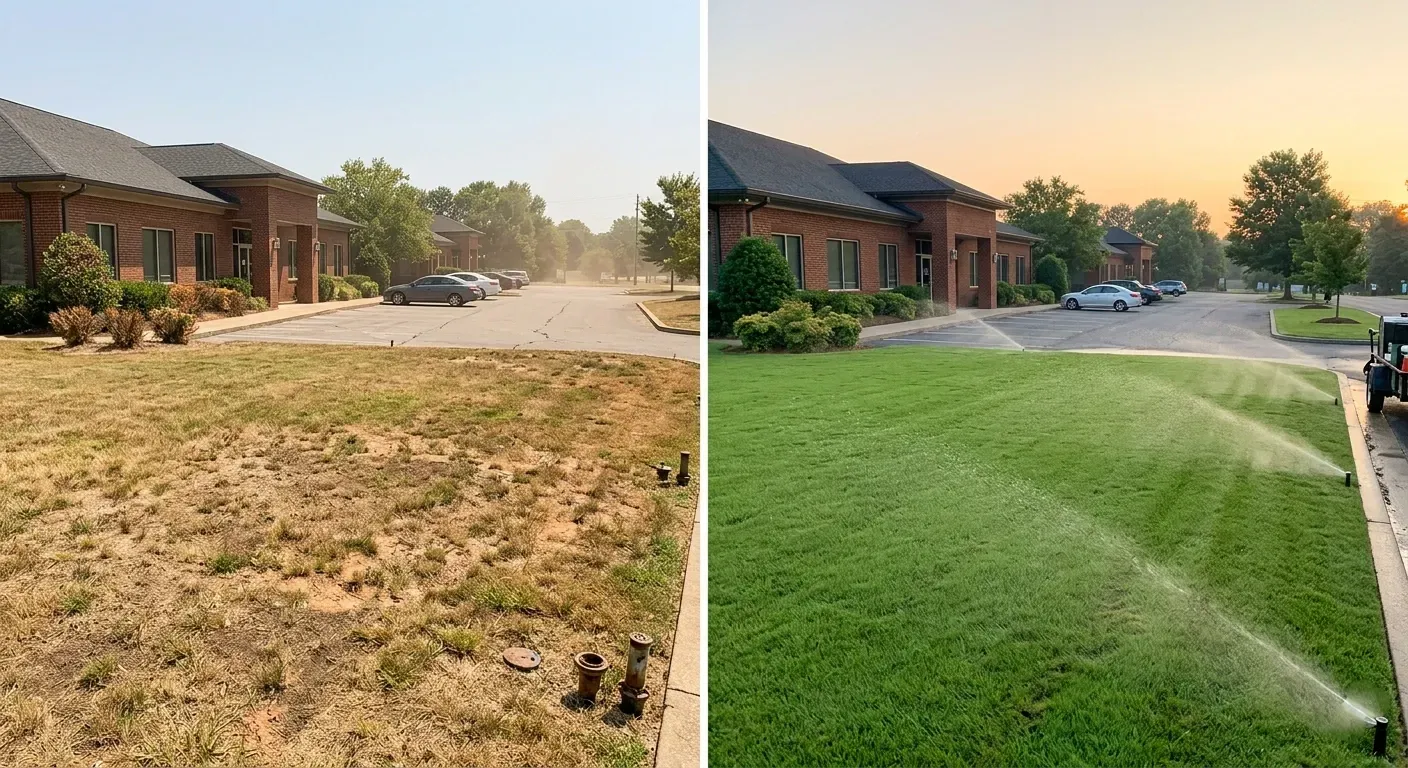
A failing irrigation system does not always announce itself with an obvious geyser or a completely dead lawn. In most cases, the signs are more subtle and easy to write off until the damage and repair become expensive. Here are the key red flags to watch for, along with the benchmarks of a system that is working correctly.
| Warning Signs Your System Is Failing | Signs of a Healthy System |
|---|---|
| Brown or yellow patches in specific zones | Even, consistent coverage across all zones |
| Water pooling or running off hard surfaces | Stable monthly water bills season over season |
| Uneven zones, some dry, some soggy | Sprinkler heads aimed at turf, not pavement |
| Water bill spiking with no explanation | Soil moist 4 to 6 inches deep after a cycle |
| Heads spraying sidewalks, parking lots, or buildings | No standing water or runoff after watering |
One quick field test you can run yourself is the footprint test. Walk across your turf and check whether your footprints remain visible after five minutes. If they do, the grass blades are not recovering because the root zone is critically dry. That is a clear sign your irrigation system is not delivering enough water, even if it appears to be running fine.
Irrigation system maintenance is easier and far less expensive when you catch these signs early. Waiting until mid-July to investigate means repairs are happening during peak heat, which adds recovery time and cost for the turf itself.
What AquaQuest's Commercial Irrigation Audit Covers
Zone-by-Zone Pressure and Coverage Check
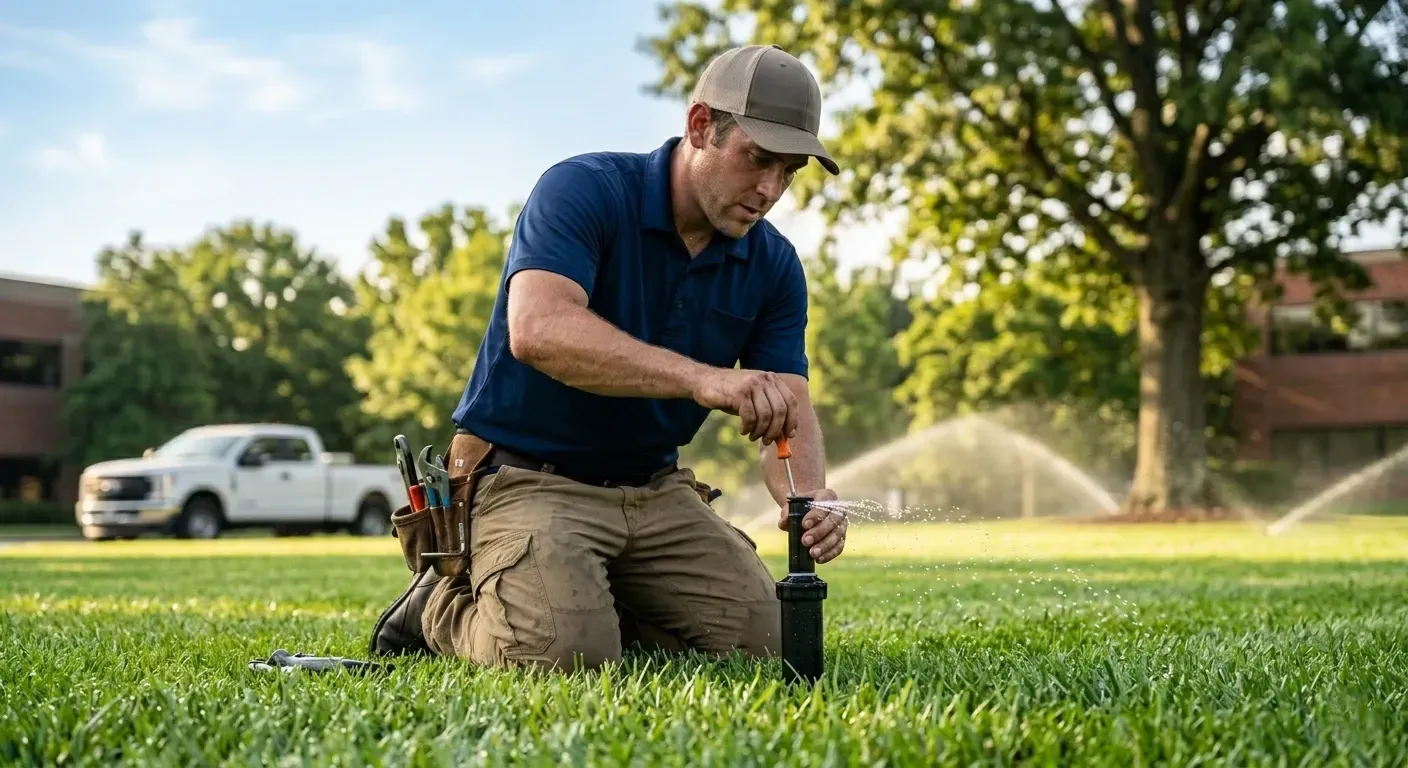
Every zone on your property is run independently during a full audit. The technician checks for head-to-head coverage, meaning the spray from one head should reach the next head in the pattern. Gaps in coverage show up as dry patches. Overlapping zones can be identified and adjusted to prevent overwatering and unnecessary water waste. Pressure is tested in each zone because low pressure reduces throw distance, while high pressure causes misting that evaporates before it reaches the root zone. Head types are also verified to make sure each zone has the correct head for the area it is covering.
Controller and Watering Schedule Audit
Your controller is the brain of your system, and if it is programmed for spring conditions, it is costing you money. During the summer audit, the controller is reviewed and reprogrammed to match Tennessee's summer demands. For commercial turf in this climate, that means deep watering two to three times per week rather than daily light misting. Shallow daily watering keeps roots near the surface where soil temperatures are highest, which stresses the grass and makes it far more vulnerable to drought and disease.
The best time to water commercial turf in Tennessee is between 4:00 AM and 9:00 AM. Morning watering allows the leaf surface to dry before temperatures climb, which significantly reduces fungal disease pressure. Evening watering leaves moisture on the grass overnight, creating the exact conditions that Brown Patch and Dollar Spot thrive in.
If your property does not already have a rain sensor or smart controller, AquaQuest can recommend and install one. Smart controllers pull local Tennessee weather data and adjust your schedule automatically, which means your system will not run at full capacity the morning after a thunderstorm.
Head Inspection and Irrigation System Maintenance
Every sprinkler head is checked for clogs, tilt, and wear. Heads that have shifted out of alignment because of foot traffic, vehicle activity, or ground settling are identified and corrected. Valve boxes and lateral lines are inspected for leaks, which can waste thousands of gallons without ever being visible at the surface.
Irrigation system maintenance at this level is a preventative strategy. The goal of the pre-season audit is to flag anything that needs attention before the July and August peak heat window arrives. Replacing a worn head or patching a slow leak in June costs a fraction of what it costs to restore stressed or dead turf in August. The best time to water and the best schedule in the world will not help if heads are not delivering water where it needs to go.
The Real Cost of Skipping a Summer Irrigation Audit in Tennessee
It is easy to think of irrigation as a maintenance expense you can push to next season. That perspective changes quickly when you start looking at what goes wrong when the system is not performing.
Commercial sod replacement in Tennessee typically runs between $0.35 and $0.65 per square foot installed. On a single failed zone covering 5,000 square feet, you are looking at $1,750 to $3,250 just to restore the turf, and that does not include the cost of the repair itself or the weeks it takes for new sod to establish in summer heat. An audit costs a fraction of that and identifies the problem before it becomes a landscape replacement project.
A single broken or misaligned sprinkler head can waste more than 25,000 gallons of water in a single season without any visible sign at the surface. That waste shows up on your water bill, and in municipalities with tiered water rates, the cost compounds quickly as usage climbs into higher rate brackets.
There are liability considerations as well. Heads spraying sidewalks and walkways create slip hazards, particularly in the early morning hours when surfaces are already damp. For retail centers and HOA communities, that is both a safety issue and a legal exposure.
For HOAs and retail properties in high-visibility areas, a lawn care Tennessee situation that is visually degraded goes beyond aesthetics. Dead turf lowers perceived property value, can trigger HOA compliance notices, and sends a message to customers and residents that the property is not being maintained. The summer irrigation audit for Tennessee commercial properties is an investment in protecting the asset, not just the grass.
Common Summer Irrigation Mistakes on Commercial Properties
Most commercial irrigation problems in Tennessee are not equipment failures. They are scheduling and management errors that are easy to fix once you know what to look for. Here are the five most common mistakes we see on commercial properties every summer.
1. Running the same spring schedule all summer.
Spring programming is calibrated for cooler temperatures and more consistent rainfall. By the time June arrives in Clarksville, that schedule is already out of date. Evapotranspiration rates nearly double between April and July, which means your turf needs significantly more water to stay healthy, even if the runtime looks the same on the controller.
2. Daily shallow watering.
Short daily cycles keep root systems near the surface of the soil, right where temperatures are hottest and moisture evaporates fastest. Commercial turf needs deep, infrequent watering to develop roots that reach into cooler, more stable soil. Target 1 to 1.5 inches of water per week, delivered in two to three deep sessions rather than small daily doses.
3. Evening watering.
Tennessee's summer nights are generally warm and humid. Watering in the evening leaves leaf surfaces wet for hours overnight, which is exactly the environment that fungal diseases like Brown Patch and Dollar Spot need to establish. Always schedule commercial irrigation cycles to run between 4:00 and 9:00 AM so the turf has time to dry before temperatures rise.
4. Running the system after rainfall.
Without a rain sensor or smart controller, your irrigation system will run on schedule regardless of whether it rained the night before. This wastes water, overloads soil that is already saturated, and promotes fungal issues. A properly installed rain sensor prevents this entirely and pays for itself quickly in reduced water bills.
5. Ignoring head alignment drift.
Sprinkler heads shift over time from foot traffic, vehicles, and ground settling. A head that was perfectly aimed at turf last fall may now be spraying a sidewalk or parking lot. Beyond the obvious water waste, wet pavement creates slip hazards. Head alignment drift is one of the most common commercial lawn watering mistakes in Tennessee and one of the easiest to correct during a scheduled audit.
Irrigation Repair and Maintenance Before Tennessee's Peak Summer Heat
Sprinkler system repair in Clarksville, TN is available from AquaQuest whether they installed your system or not. If your DIY walk-through has turned up a broken head, a leaking valve, or a zone that is not responding, professional repair is the fastest way to get the system performing before peak heat arrives.
Before the July and August stretch hits, here is a checklist of what should be inspected or addressed on any commercial property in Tennessee:
- Sprinkler heads: check for clogs, tilt, wear, and misalignment
- Valve boxes: inspect for leaks and proper operation
- Lateral lines: look for signs of damage or slow leaks
- Controller: review and update programming for summer conditions
- Rain sensor: test existing sensor or install a new one
- Smart controller upgrade: consider a weather-based controller if not already installed
- Zone re-programming: adjust runtimes and frequency for Tennessee summer heat
AquaQuest works on all brands and systems, not just those they installed. Irrigation system maintenance does not have to mean starting over with a new provider. If your current system needs attention, the AquaQuest team can evaluate, repair, and optimize it regardless of manufacturer or installation history.
Schedule Your Commercial Irrigation Audit in Clarksville, TN
Ready to protect your commercial property before Tennessee's peak heat hits? Schedule your summer irrigation audit with AquaQuest today! The team serves Clarksville, TN, and the surrounding Montgomery County area and works on all brands and systems. Visit our
contact page to book your inspection.
Frequently Asked Questions: Summer Irrigation Audits in Tennessee
How often should a commercial property have an irrigation audit in Tennessee?
Most commercial properties benefit from at least one audit per year, typically in late spring before summer heat sets in. High-traffic properties with large irrigated areas or complex zone configurations may benefit from a mid-season check in July as well. The goal is to catch issues before they result in turf damage, not after.
What is the best time to water commercial grass in summer in Tennessee?
The most effective window for watering commercial turf in Tennessee during the summer is between 4:00 AM and 9:00 AM. Morning watering allows the grass to absorb moisture before peak evaporation and gives leaf surfaces time to dry before temperatures rise, which reduces the risk of fungal disease.
Can I water my commercial lawn every day in summer?
Daily watering is generally not recommended for commercial turf in Tennessee. Short daily cycles encourage shallow root development, which makes grass more vulnerable to drought stress when temperatures are highest. Deep watering two to three times per week promotes deeper root growth and produces more resilient turf throughout the summer.
Why does my commercial lawn look brown even though I am watering it?
There are several possible causes. The most common include coverage gaps from misaligned or worn heads, insufficient runtime for the current heat conditions, watering at the wrong time of day, or underlying soil issues like compaction and clay hardpan common in Montgomery County. A zone-by-zone audit is the most reliable way to pinpoint the cause and correct it.
Does AquaQuest offer sprinkler system repair in Clarksville, TN?
Yes. AquaQuest provides sprinkler system repair in Clarksville, TN and the surrounding area, including service on all brands and systems. Whether you need a head replacement, a pressure fix, a valve repair, or a full controller upgrade, the team can assess and repair your system. You can reach AquaQuest through their website at aquaquestirrigation.com.
You might also like